Charge-Air Cooling: Protecting Turbo Performance Through Intercooler Maintenance
Turbochargers compress intake air to increase engine power, but compression generates heat. Hot air holds less oxygen per volume and promotes detonation if it enters the combustion chamber unchecked. The charge-air cooling system — centered on the intercooler — removes that heat before the air reaches the cylinders, preserving both performance and engine longevity.
At quadripleg, we see turbocharged vehicles arrive with power loss, elevated fuel consumption, and check-engine codes related to boost pressure. Many of these issues trace back to neglected intercooler maintenance rather than turbo failure itself. Understanding how the charge-air path works helps owners protect their investment before expensive turbo repairs become necessary.
How Charge-Air Cooling Supports Turbo Performance
The charge-air path on a turbocharged engine follows a continuous loop. The turbo compressor draws in ambient air and pressurizes it. That pressurized air passes through the intercooler, where heat transfers to outside air flowing across the cooler fins. Cooled, denser air then travels through piping to the intake manifold and into the combustion chambers.
Efficient cooling directly affects engine output. Cooler intake air contains more oxygen molecules per cubic foot, allowing the engine management system to inject more fuel and produce more power without exceeding safe combustion temperatures. When the intercooler cannot shed heat effectively, the engine pulls timing and reduces boost to protect internal components — a condition owners experience as sluggish acceleration and reduced towing capacity.
Two intercooler designs appear on most vehicles:
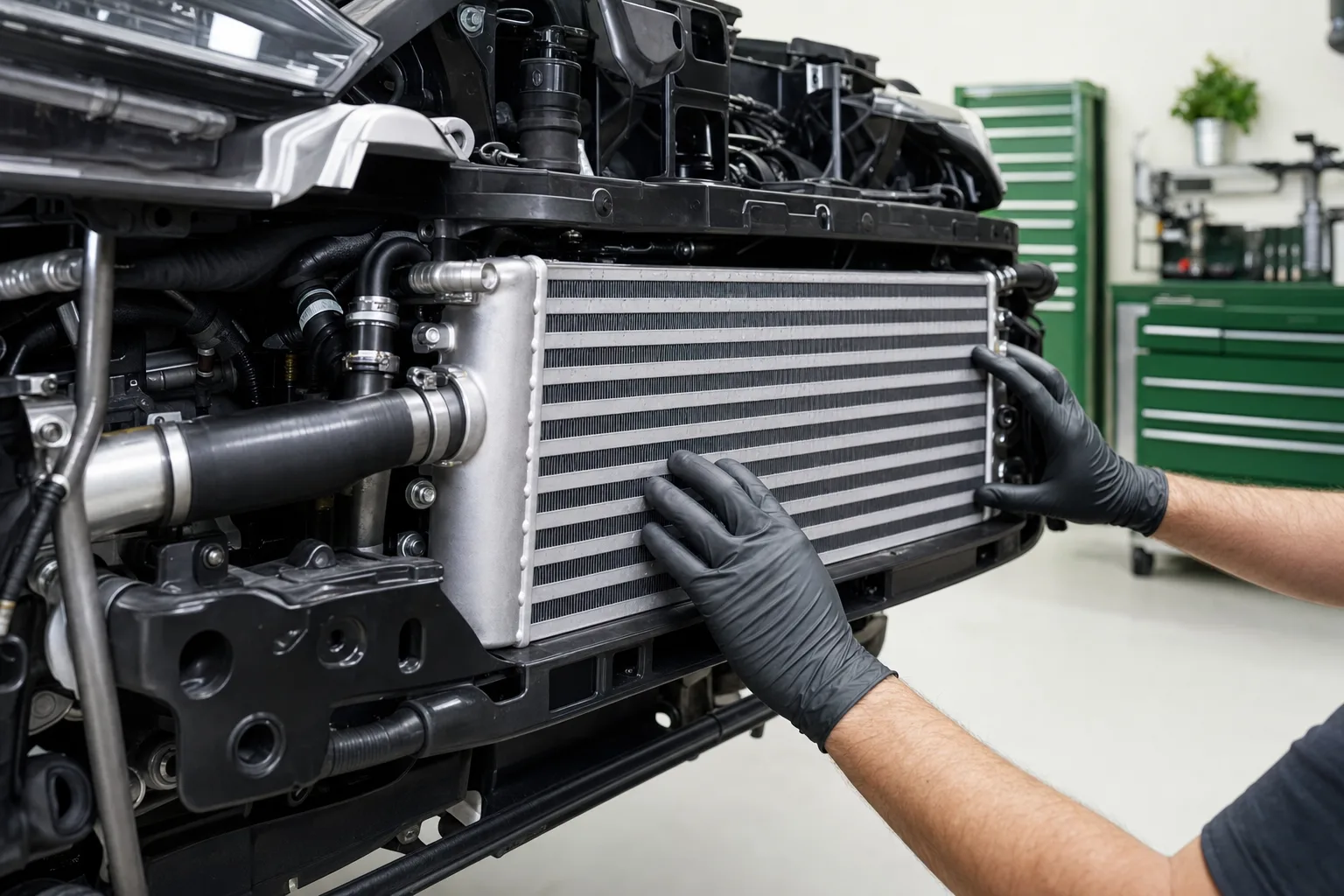
- Air-to-air intercoolers — Mounted in the front grille area, using ambient airflow for heat exchange. Common on gasoline and diesel passenger vehicles.
- Air-to-water intercoolers — Use an engine coolant circuit or dedicated water pump to transfer heat. Found on some high-performance and compact-engine applications where front-mount space is limited.
Both designs depend on unobstructed airflow, intact seals, and secure connections throughout the charge-air plumbing.
Signs of Intercooler Degradation
Intercooler problems develop gradually. Owners often adapt to declining performance without recognizing the cause until a significant power drop or warning light appears.
Indicators that charge-air cooling needs attention include:
- Noticeable power reduction compared to when the vehicle was new, especially under sustained load
- Increased turbo lag or delayed boost response after pressing the accelerator
- Check-engine light with codes referencing boost pressure, charge-air temperature, or mass airflow rationality
- Visible oil residue around intercooler connections, suggesting turbo seal wear combined with plumbing leaks
- Hissing sounds under acceleration that indicate pressurized air escaping from a hose or clamp joint
- Elevated intake air temperature readings on vehicles equipped with a charge-air temperature sensor
External damage from road debris can puncture intercooler fins or core tubes without producing an immediate obvious leak. Small punctures allow boost pressure to escape under load while the system appears intact during a visual inspection at idle.
Inspection Procedures and Service Intervals
Intercooler maintenance does not appear on most owner maintenance schedules as a standalone item. We integrate charge-air system checks into broader turbo vehicle service visits based on mileage, operating conditions, and manufacturer guidance.
Our standard inspection covers:
- External fin condition — Bent, clogged, or damaged fins reduce heat transfer efficiency. We look for debris accumulation from road grime, insects, and leaves blocking airflow through the core.
- Core integrity — Pressure testing reveals internal leaks that visual inspection cannot detect. We apply regulated pressure to the charge-air circuit and monitor for drop-off over time.
- Mounting hardware — Loose brackets allow vibration that fatigues hose connections and can crack intercooler end tanks over thousands of miles.
- Oil contamination — Excessive oil inside the intercooler indicates turbocharger seal wear. Cleaning the intercooler without addressing the turbo source allows oil to return and contaminate the intake tract again.
For vehicles used in dusty environments, towing heavy loads regularly, or operating in sustained high-ambient-temperature conditions, we recommend charge-air system inspection every 24,000 to 30,000 miles. Daily drivers in moderate conditions may extend that interval, but the system should still be evaluated during any service visit where boost-related symptoms are reported.
Boost Leak Detection Methods
A boost leak allows pressurized air to escape before reaching the intake manifold. The engine compensates by commanding higher turbo output, increasing wear on the turbocharger and reducing overall efficiency. Detecting leaks requires methods beyond visual inspection because many leak points open only under boost pressure.
Techniques we use at our facility include:
- Smoke testing — Non-toxic smoke is introduced into the charge-air circuit with the engine off. Escaping smoke pinpoints leak locations at hose joints, intercooler seams, and cracked piping.
- Boost pressure monitoring — A scan tool records requested versus actual boost during a controlled drive cycle. Consistent underboost relative to commanded values indicates a leak or restriction upstream of the sensor.
- Soap solution application — On accessible joints, a soapy water solution bubbles when pressurized air escapes, revealing leaks at clamp connections and intercooler end tank seals.
- Pressure decay testing — The sealed charge-air system is pressurized to a specified value and monitored for pressure loss over a set period. Acceptable decay rates vary by manufacturer specification.
Leaks at the intercooler itself may require replacement rather than repair, depending on the location and severity of the damage. Small hose and clamp leaks are typically resolved with new silicone couplers and properly torqued T-bolt clamps designed for boost applications.
Hose, Clamp, and Connection Maintenance
The charge-air plumbing between the turbo, intercooler, and intake manifold experiences constant thermal cycling. Hoses expand when hot pressurized air flows through them and contract during cooldown. Over time, this cycling degrades rubber and silicone compounds, loosens clamp tension, and creates leak paths at connection points.
Preventive maintenance for charge-air connections includes:
- Inspecting all hose sections for swelling, cracking, or oil saturation during each turbo-related service visit
- Verifying clamp torque and replacing worm-gear clamps with T-bolt or constant-torque designs where boost levels exceed standard hose clamp capacity
- Checking that hoses are routed without sharp bends or contact points that cause abrasion against engine components
- Replacing plastic charge-air pipe sections that have become brittle or discolored from heat exposure
- Confirming that blow-off valve and diverter valve connections seal properly and respond correctly to pressure changes
After any intercooler or charge-air plumbing service, we perform a boost verification drive to confirm that the system holds pressure across the operating range. Skipping this confirmation step leaves undetected leaks that undermine the repair and accelerate turbo wear.
Charge-air cooling is not an optional accessory on turbocharged engines — it is a core part of the power and protection strategy that keeps combustion temperatures within safe limits. Regular intercooler inspection, proactive leak detection, and attention to hose and clamp condition preserve turbo performance and prevent the cascade of damage that begins when hot, unregulated air reaches the cylinders.
For charge-air system evaluation or turbo-related concerns, visit quadripleg at 607 Westheimer Rd, Houston, or contact us at +1 713-635-4947 and [email protected].