Hard Starts in Cold Weather: A Technician's Approach to Intermittent Faults
Cold-start problems are among the most frustrating complaints we hear in the service bay. The vehicle cranks longer than normal, stumbles before settling into a smooth idle, or fails to start entirely on the first attempt — but only when ambient temperatures drop. By the time the owner drives to our shop, the engine is warm, everything works perfectly, and the fault cannot be reproduced.
Intermittent cold-start issues require a different diagnostic mindset than steady-state failures. At quadripleg, we approach these cases with temperature-triggered testing, extended data logging, and component checks that specifically target the conditions present during a failed start attempt. This article explains the methods we use when the problem hides behind warm-engine normalcy.
Why Cold-Start Faults Disappear at the Shop
Several physical and electrical changes occur as an engine transitions from cold soak to operating temperature. Understanding these changes explains why faults appear and vanish without any repair being performed.
When an engine sits overnight, metal components contract, oil thickens, and fuel vaporizes less readily in the intake tract. Battery internal resistance increases, reducing available cranking voltage. Rubber seals and gaskets stiffen, potentially creating temporary vacuum or fuel leaks that seal themselves once heat expands the material.
Electronic components behave differently at low temperatures as well. Sensor readings shift, actuator response times lengthen, and solder joints with micro-fractures may open until thermal expansion restores continuity. A fuel pump delivering marginal pressure at 40 degrees may perform adequately at 180-degree operating temperature, masking the underlying weakness during a standard shop test.
These temperature-dependent behaviors mean that a warm-engine diagnostic session often returns normal results even when a genuine fault exists. Reproducing the failure requires either waiting for cold conditions or artificially simulating them.
Data Logging and Temperature-Triggered Diagnosis
Our first step on intermittent cold-start cases is installing a data logger that records parameters continuously across multiple start cycles. The logger captures information that a brief scan tool snapshot misses — trends across time, correlation between temperature and sensor values, and events that occur during the first seconds after key-on.
Parameters we monitor during cold-start logging include:
- Engine coolant temperature and intake air temperature at key-on
- Cranking RPM and battery voltage during the start attempt
- Fuel rail pressure from key-on through idle stabilization
- Short-term and long-term fuel trim during the first 60 seconds of operation
- Mass airflow or manifold absolute pressure readings relative to expected values
- Camshaft and crankshaft sensor correlation during cranking
- Throttle position and commanded idle airflow on electronic throttle bodies
We ask owners to leave the logger connected overnight and attempt a normal cold start the following morning. The recorded file often reveals pressure drops, sensor dropouts, or airflow anomalies that occur for only a few seconds before the engine warms enough to compensate. This evidence directs testing toward specific subsystems rather than broad parts replacement.
Fuel Delivery Checks Under Low-Temperature Conditions
Fuel system faults account for a significant share of cold-start complaints. Gasoline does not atomize as effectively in cold intake air, so the engine management system commands additional fuel enrichment during startup. If delivery pressure, injector spray pattern, or fuel quality falls outside acceptable range, enrichment cannot compensate and the engine stumbles or fails to fire.
Our fuel system evaluation during cold conditions focuses on:
- Rest pressure and leakdown — We measure fuel rail pressure after key-on with the engine off, then monitor how quickly pressure drops over several minutes. Slow leakdown indicates a failing check valve or injector seal that affects cold starts more than warm operation.
- Cranking pressure — Pressure during actual crank must meet manufacturer minimums. A pump that delivers adequate pressure at idle may not maintain volume during high-demand cranking at low battery voltage.
- Injector balance testing — Comparing drop rates across cylinders identifies injectors with restricted flow or delayed opening that cause uneven cold-start combustion.
- Fuel sample inspection — Water contamination, phase separation in ethanol blends, and degraded gasoline affect cold-start performance before they cause obvious warm-engine drivability issues.
On direct-injection engines, carbon buildup on intake valves creates an additional cold-start variable. Because fuel no longer washes the intake tract, deposits absorb incoming air and disrupt the air-fuel ratio until the engine reaches temperature. Cleaning or walnut blasting may be necessary when logging shows lean startup conditions despite verified fuel pressure.
Intake and Air Management Component Testing
Air management systems must deliver a precise volume of filtered air during startup. Components that stick, leak, or respond slowly at low temperatures create faults that self-correct once the engine bay warms.
We inspect and test the following during cold-start diagnosis:
- Intake flap actuators — Variable intake systems use flaps to optimize airflow at different RPM ranges. Actuators that bind when cold may not reach the correct position during startup, causing airflow readings that conflict with what the computer expects.
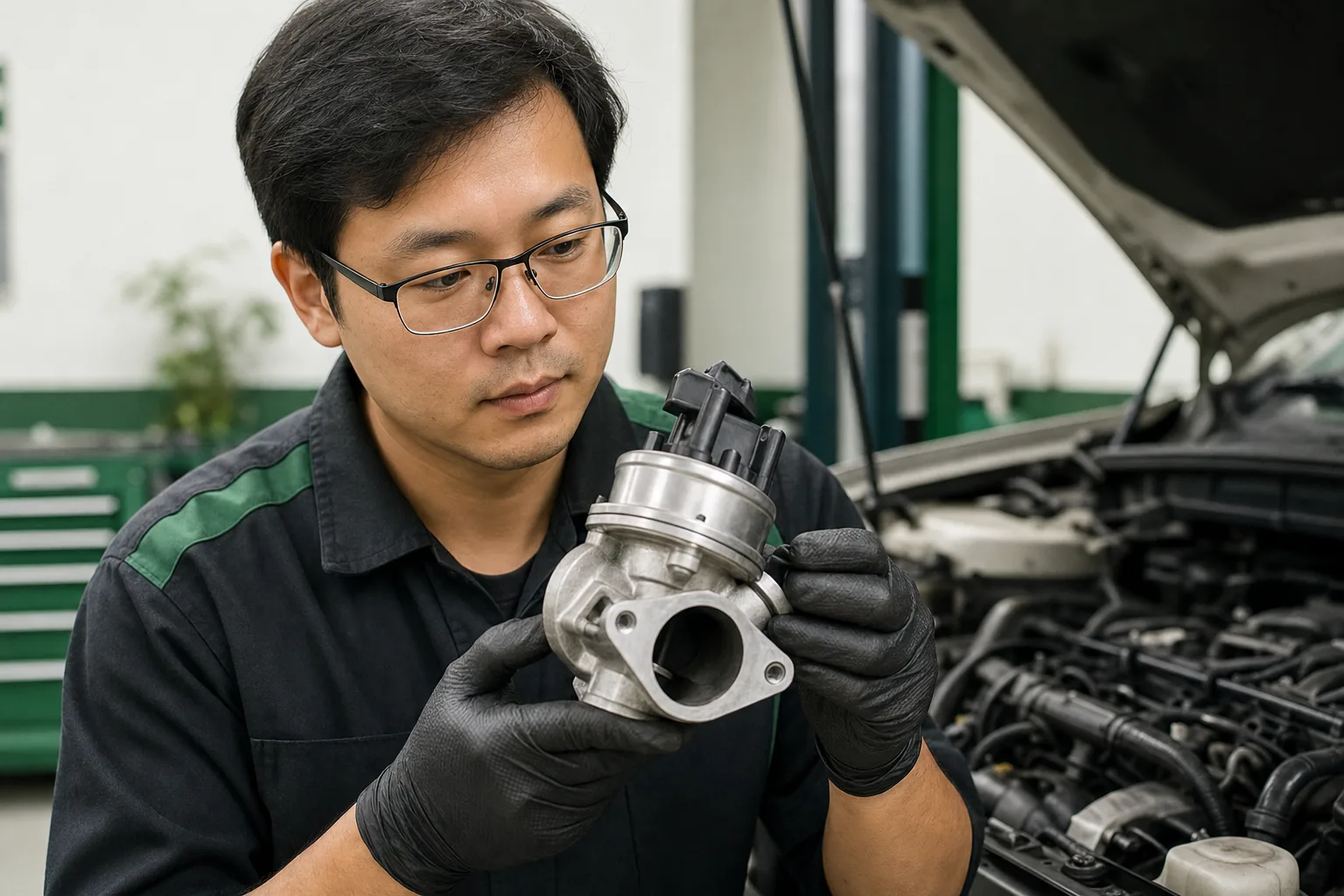
- Idle air control valves and electronic throttle bodies — Carbon accumulation or motor wear affects minimum airflow delivery during the critical first seconds after start.
- PCV and vacuum hoses — Stiff rubber hoses crack at connection points and seal poorly until heat softens the material. Smoke testing at cold soak temperature reveals leaks that a warm-engine test misses.
- Mass airflow and MAP sensors — Condensation on sensor elements or circuit boards can produce erratic readings during cold starts that stabilize as moisture evaporates.
On turbocharged vehicles, we also verify that wastegate and bypass valves seat correctly at cold temperature. A wastegate that hangs open during startup reduces effective compression and mimics a fuel delivery problem.
Creating a Reproducible Test Plan for Intermittent Starts
When logging and component testing identify a suspect area but the fault remains intermittent, we build a structured test plan designed to reproduce failure conditions reliably. This plan documents each step, expected results, and pass-fail criteria so that any technician in our shop can execute the same sequence.
A typical cold-start test plan includes:
- Verify battery state of charge and perform a load test — weak batteries cause low cranking speed that prevents proper sensor synchronization
- Allow a minimum cold soak period of six hours or overnight before testing
- Record ambient temperature and engine coolant temperature at the start of each test cycle
- Perform three consecutive start attempts with full data capture on each
- Compare results against manufacturer specifications and prior logged data from the same vehicle
- Isolate one variable at a time — replace or bypass a single component and repeat the cold soak cycle before drawing conclusions
Patience is essential. Rushing to replace parts based on warm-engine tests wastes time and money on components that were never the root cause. Cold-start diagnosis rewards methodical data collection over guesswork.
If your vehicle hesitates, cranks excessively, or fails to start on cold mornings but runs normally once warm, the fault is real even when a shop cannot reproduce it on the first visit. Bring your concern to quadripleg at 607 Westheimer Rd, Houston, or call +1 713-635-4947 to arrange a cold-soak diagnostic session. We will work with your schedule to capture the data that reveals what warm-engine testing cannot.