EGR System Servicing: When Cleaning Helps and When Replacement Is Required
The exhaust gas recirculation system is one of the most misunderstood components on modern gasoline and diesel engines. Its purpose is straightforward — redirect a measured portion of exhaust back into the intake to lower combustion temperatures and reduce nitrogen oxide emissions. The practical consequence is less straightforward: hot exhaust gases carry carbon and soot that accumulate inside valves, passages, and coolers over time.
At quadripleg, EGR-related service requests usually arrive after a check-engine light, rough idle, or failed emissions test. The critical decision is not whether the system needs attention, but whether cleaning will restore reliable operation or whether worn internal components require replacement. Making that call correctly saves repeat visits and prevents collateral damage to intake and turbo systems.
How the EGR System Works in Modern Engines
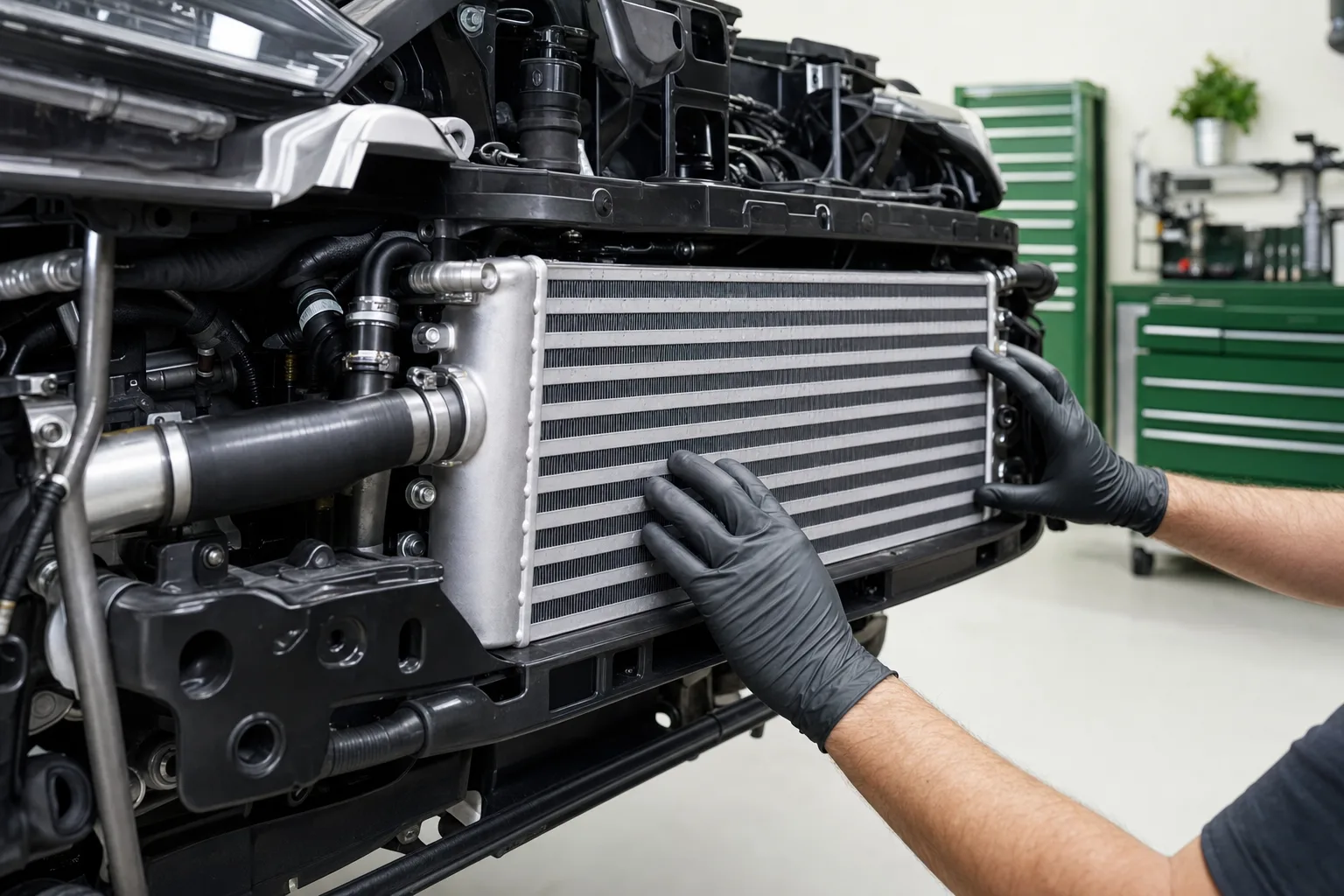
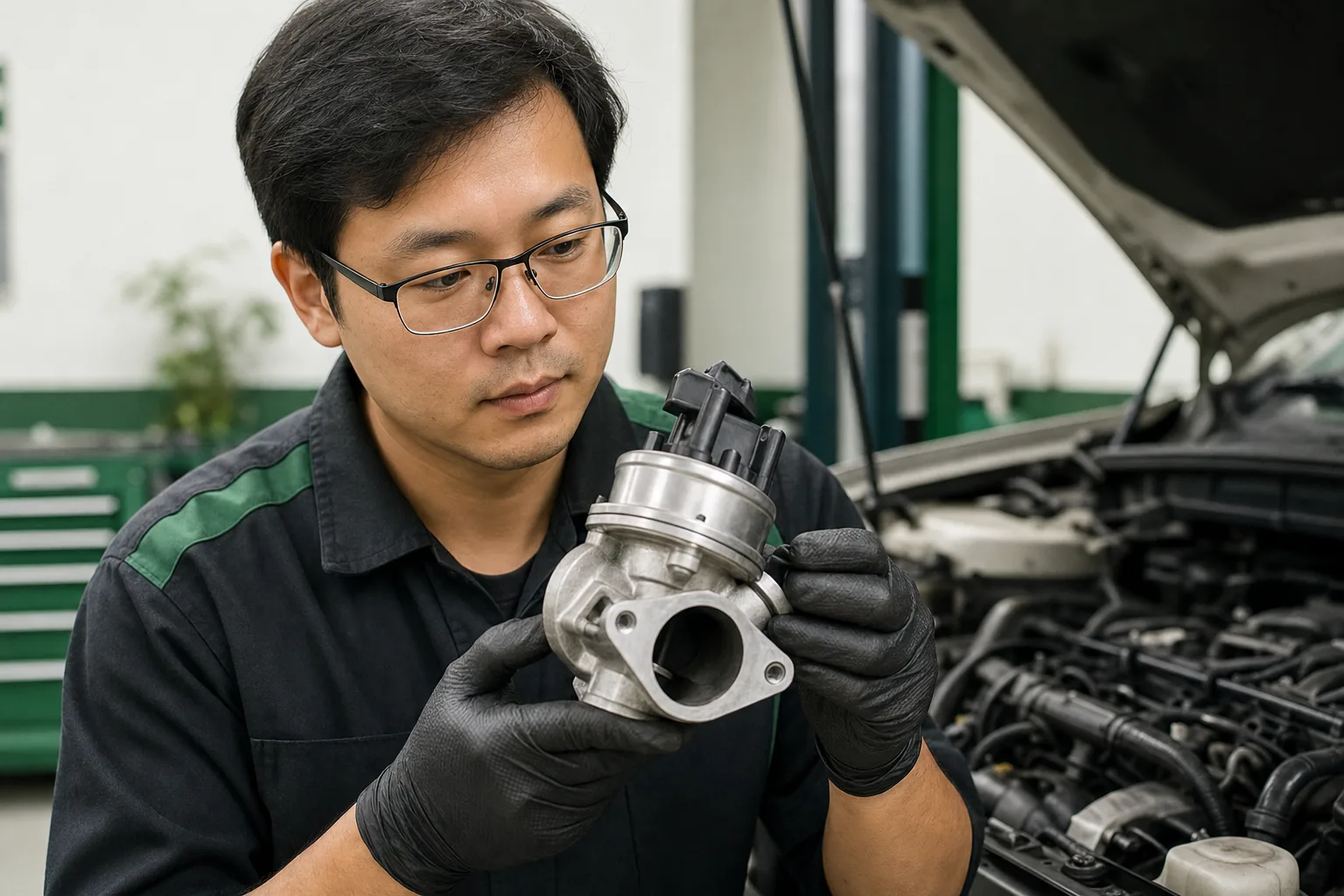
An EGR system consists of several coordinated parts. The EGR valve controls how much exhaust gas enters the intake manifold. On many vehicles, an EGR cooler reduces the temperature of recirculated gases before they mix with incoming air. Sensors monitor valve position, intake pressure, and exhaust flow to verify that the engine control module receives accurate feedback.
During normal operation, the valve opens at specific load and temperature ranges. At idle and wide-open throttle, it typically remains closed. In partial-load cruising conditions, it modulates to maintain target combustion temperatures. When carbon restricts the valve seat or passage walls, the engine receives either too much or too little recirculated gas relative to what the computer expects.
Key components involved in most EGR service procedures include:
- EGR valve — pneumatic, vacuum, or electronically actuated
- EGR cooler — liquid-cooled heat exchanger on many diesel and some gasoline applications
- Transfer passages — internal engine galleries or external pipework connecting exhaust to intake
- Position and differential pressure sensors — used for monitoring and diagnostic trouble codes
- Control solenoids and wiring — particularly on electronically managed systems
Symptoms That Point to EGR Restriction
Carbon buildup rarely produces a single obvious symptom. Instead, owners notice a combination of drivability changes and warning indicators that develop gradually. Because EGR faults share symptoms with fuel, ignition, and intake problems, proper diagnosis requires more than reading a trouble code.
Common signs we evaluate during initial inspection include:
- Check-engine light with codes related to EGR flow, position, or rationality
- Rough or unstable idle that improves once the engine reaches operating temperature
- Reduced power during acceleration, especially at mid-range RPM
- Increased fuel consumption without a corresponding change in driving habits
- Failed emissions testing due to elevated NOx readings
- Audible pinging or knocking under load on gasoline engines with excessive EGR flow
On diesel applications, a clogged EGR cooler can also introduce coolant into the intake, producing white exhaust smoke and contaminating the intake tract. This scenario moves quickly from a maintenance concern to a potential engine damage risk and requires immediate evaluation.
Diagnostic Testing Before You Choose a Fix
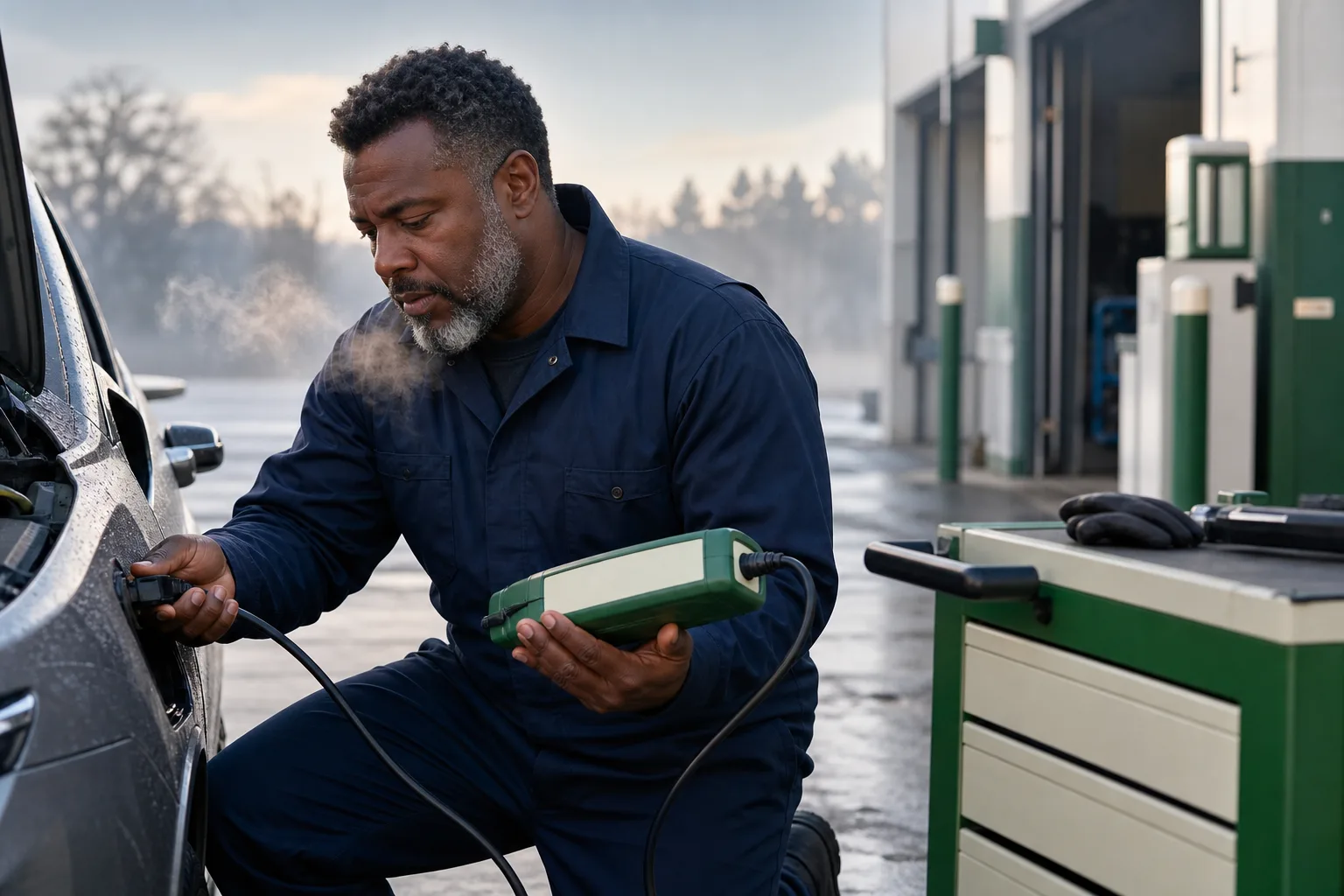
We do not default to cleaning or replacement based on mileage alone. Every EGR service at our facility begins with targeted testing that confirms the root cause and rules out unrelated faults sharing the same symptoms.
Our standard diagnostic sequence includes:
- Scan tool data review — We examine commanded versus actual EGR position, short-term and long-term fuel trim, and any pending or stored codes across related modules.
- Valve actuation test — Using bi-directional controls where supported, we verify that the valve opens and closes smoothly through its full range without binding.
- Visual and borescope inspection — Removing the valve or accessing ports allows direct assessment of carbon thickness and passage obstruction severity.
- Cooler integrity check — Pressure testing and coolant analysis identify internal leaks that cleaning cannot resolve.
- Passage flow verification — On accessible systems, we confirm that intake and exhaust galleries are not blocked beyond the valve itself.
Test results determine the service path. A valve that responds correctly on the bench but shows moderate carbon on the seat may need only cleaning. A valve with a pitted seat, damaged actuator motor, or internal leak requires replacement regardless of how clean the external surfaces appear.
When Cleaning Is the Right Approach
Cleaning is appropriate when carbon is the primary restriction and all mechanical components remain within specification. This applies to valves that bind due to deposit buildup, passages narrowed by soot accumulation, and intake plenum surfaces coated with recirculated exhaust residue.
Effective cleaning procedures vary by engine design. Some valves can be serviced on-vehicle with approved chemical treatments and manual brushing. Others require removal for ultrasonic or media cleaning in a controlled environment. We avoid aggressive scraping that damages valve seats or passage walls, because surface damage creates leak paths that cause new faults after reinstallation.
Cleaning delivers durable results when:
- Valve actuation tests pass before and after deposit removal
- Carbon depth is moderate and has not hardened into cement-like scale
- No coolant contamination is present in the EGR cooler or intake
- Passage obstructions are reachable without engine disassembly
- Related gaskets and seals are replaced during reassembly to prevent vacuum leaks
After cleaning, we perform a drive cycle verification to confirm that monitors complete and codes do not return. Follow-up inspection at the next scheduled service helps catch early re-accumulation before it affects drivability again.
When Replacement Delivers Long-Term Reliability
Replacement becomes the correct choice when internal wear, structural damage, or repeated contamination cycles make cleaning a temporary fix. Installing a new valve or cooler on a system with blocked passages upstream or downstream simply recreates the problem within a few thousand miles.
We recommend component replacement when testing reveals:
- Valve seat erosion or pitting that prevents a gas-tight seal at closed position
- Failed actuator motor, position sensor, or internal diaphragm on vacuum-operated units
- EGR cooler internal leak confirmed by pressure test or coolant in the intake tract
- Passage blockage that requires partial disassembly to access and cannot be fully cleared
- Previous cleaning attempts that restored function for less than 5,000 miles
Replacement procedures also include cleaning or replacing affected intake components, verifying turbocharger condition on forced-induction engines, and updating engine software where manufacturer service bulletins address known EGR calibration issues. Skipping these companion steps leads to premature failure of the new component.
EGR system service is not a one-size-fits-all procedure. Carbon is the usual culprit, but it is not the only one. Proper testing separates restriction problems from mechanical failures and ensures the repair matches the actual condition of your engine. If you are seeing EGR-related symptoms, contact quadripleg at +1 713-635-4947 or [email protected] to schedule a diagnostic evaluation at our Houston workshop.